

Berberine has become one of the most talked-about supplements in metabolic wellness, even earning the nickname “nature’s Ozempic.” But while the comparison has generated plenty of attention, the real science behind berberine is far more interesting.
This naturally occurring plant compound has been investigated for its potential effects on glucose metabolism, cholesterol, triglycerides and other metabolic markers. So, what does the research actually show — and what should you look for when choosing a berberine supplement?
What Is Berberine?
Berberine is a naturally occurring plant alkaloid found in plants including Berberis aristata, barberry, goldenseal and Oregon grape.[1] One reason it has attracted scientific interest is its interaction with AMP-activated protein kinase (AMPK), an enzyme involved in cellular energy regulation and processes related to glucose and lipid metabolism.[2,3] While understanding this mechanism is useful, human clinical research gives us a better indication of berberine’s potential role in metabolic wellness.
What Does the Research Show?
Several systematic reviews and meta-analyses of clinical trials have reported promising findings. A 2023 review of randomised placebo-controlled trials found that berberine supplementation was associated with modest improvements in total cholesterol, LDL cholesterol and triglycerides.[4] Another systematic review involving people with type 2 diabetes reported improvements in several glucose and lipid measures, including fasting blood glucose and HbA1c.[5] The research is encouraging, but studies vary in their doses, formulations and duration, and more high-quality, longer-term research is needed. Berberine should therefore be considered as nutritional support alongside a healthy lifestyle, rather than a replacement for medical care or prescribed medication.
Is Berberine Really “Nature’s Ozempic”?
Not quite. Semaglutide, the active ingredient in medicines such as Ozempic and Wegovy, is a GLP-1 receptor agonist. In the STEP 1 clinical trial, semaglutide 2.4 mg alongside lifestyle intervention produced an average body-weight reduction of 14.9% after 68 weeks.[6] Berberine works through different biological pathways. A systematic review and meta-analysis found reductions in measures including BMI and waist circumference, but results for overall body-weight reduction were less consistent.[7] There has also been no large head-to-head clinical trial showing that berberine produces equivalent effects to semaglutide. Rather than viewing berberine as a “natural Ozempic”, it makes more sense to consider it on its own merits as a botanical ingredient with growing research interest in metabolic health.
How Do I Choose a Quality Berberine Supplement
With berberine’s growing popularity comes a growing number of products. Three factors are worth considering:
- Dosage: Clinical studies have commonly investigated daily amounts of approximately 900–1,500 mg, often divided into multiple doses.[4,5]. Genologix recommends a daily dose of 1,000 mg. This falls within the range commonly investigated in clinical studies and is consistent with amounts used in human research.
- Standardisation: Botanical extracts can vary considerably. Standardisation provides a defined level of a specified active constituent, helping improve consistency.
- Quality: The quality of a supplement isn’t determined by the ingredient alone. Manufacturing processes, raw-material controls, testing, documentation and quality systems all matter.[8,9]
Why Genologix Berberine?
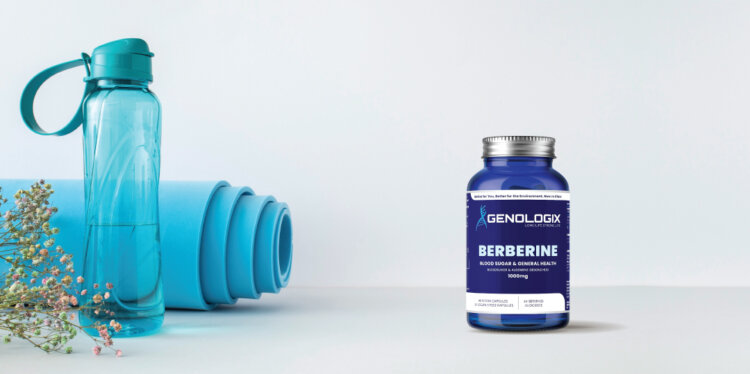
Genologix Berberine uses Berberis aristata root extract, standardised to a minimum of 97% berberine. For your peace of mind, our products are manufactured using established quality-management systems and under the oversight of a Responsible Pharmacist. When you choose Genologix, you are choosing:
> The highest quality and compliance standards
>Effective dosages
>The best value
The Bottom Line
Berberine may be enjoying its moment in the wellness spotlight, but there is genuine scientific research behind the ingredient. The evidence is still developing, and although berberine isn’t “nature’s Ozempic,” research into its potential role in glucose and lipid metabolism makes it an interesting option for adults focused on metabolic wellness. If you’re considering adding berberine to your routine, look beyond the hype. Consider the research, dosage, standardisation and manufacturing quality behind the product you choose. Berberine may not be a shortcut — but choosing a well-formulated, quality-controlled supplement is a good place to start.
References
- National Center for Complementary and Integrative Health (NCCIH). https://www.nccih.nih.gov/health/berberine-and-weight-loss-what-you-need-to-know
- Yin, J., Xing, H. & Ye, J. (2006). Berberine, a natural plant product, activates AMP-activated protein kinase with beneficial metabolic effects in diabetic and insulin-resistant states. https://pubmed.ncbi.nlm.nih.gov/16873688/
- Turner, N. et al. (2008). Berberine and its more biologically available derivative, dihydroberberine, inhibit mitochondrial respiratory complex I. https://pubmed.ncbi.nlm.nih.gov/18285556/
- Blais, J.E., Huang, X. & Zhao, J.V. (2023). Overall and sex-specific effect of berberine for the treatment of dyslipidemia in adults: a systematic review and meta-analysis of randomized placebo-controlled trials. https://pubmed.ncbi.nlm.nih.gov/36941490/
- Guo, J. et al. (2021). The effect of berberine on metabolic profiles in type 2 diabetic patients: a systematic review and meta-analysis of randomized controlled trials. https://pubmed.ncbi.nlm.nih.gov/34956436/
- Wilding, J.P.H., Batterham, R.L., Calanna, S. et al. (2021). Once-weekly semaglutide in adults with overweight or obesity. https://www.nejm.org/doi/full/10.1056/NEJMoa2032183
- Xiong, P., Niu, L., Talaei, S. et al. (2020). The effect of berberine supplementation on obesity indices: a dose-response meta-analysis and systematic review of randomized controlled trials. https://pubmed.ncbi.nlm.nih.gov/32379652/
- South African Health Products Regulatory Authority (SAHPRA). https://www.sahpra.org.za/document/communication-to-industry-7-04-health-supplements-safety-and-efficacy/
- South African Health Products Regulatory Authority (SAHPRA). https://www.sahpra.org.za/document/sa-guide-to-good-manufacturing-practice-for-medicines/
Disclaimer
These statements have not been evaluated by SAHPRA. This article is for general informational purposes only and does not constitute medical advice. Health supplements are not intended to diagnose, treat, cure or prevent any disease. Please consult a healthcare professional before starting any new supplement, particularly if you are pregnant, breastfeeding, taking medication or managing a medical condition. Use supplements as part of a balanced diet and healthy lifestyle.